REWIND THE WEB

View the cache of any page or website.

Paste a URL, open its archived snapshot. The Internet remembers — even when the original page is gone.

Only Web Archive and Archive.today still work. Google, Yandex, Bing and Yahoo all shut down their public caches.

▶ Open cache How it works

Open a cached page

Paste your URL (with https:// or http://) into a working service below.

▶ WORKS

Web Archive · Wayback Machine

Since 1996. Hundreds of billions of snapshots.

▶ WORKS

Archive.today · archive.ph

On-demand snapshots since 2012. Captures pages other archives miss.

How it works

Paste a link into one of the cassettes above and hit the button. We redirect you to the public snapshot URL for that service. No tracking, no scraping — just a redirect.

If a snapshot exists, you see the archived page. If not, the archive will usually offer to save the current version.

The two cache services that still work

▶ WORKS Web Archive (archive.org)

Web Archive cached pages

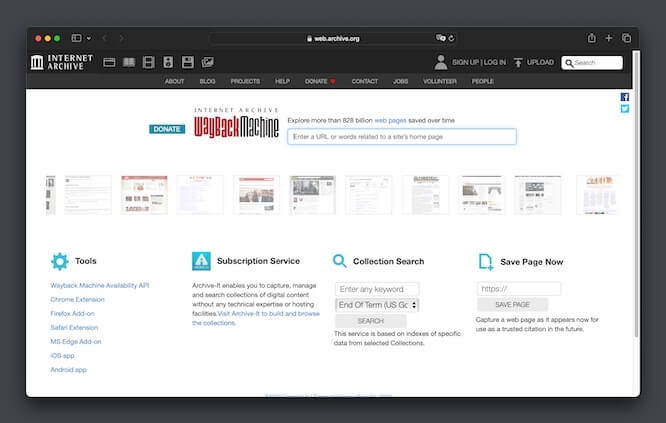
The Wayback Machine, operated by the Internet Archive, has been crawling the web since 1996. Its public collection holds hundreds of billions of page snapshots — the largest historical record of the web that exists.

Enter any URL and you can jump to a snapshot from a specific year, week, or day. The deeper the history, the more likely you’ll find what disappeared.

▶ Open in Web Archive

▶ WORKS Archive.today (archive.ph)

Archive.today (also reachable as archive.ph, archive.is, archive.li) is an independent on-demand snapshot service. Unlike the Wayback Machine, it preserves a static visual copy of the page exactly as it rendered — including paywalled or JS-heavy pages that other archives often miss.

If a URL has been archived there before, you will see the existing snapshots. If not, you can save one yourself in a click.

▶ Open in Archive.today

Cache services that are no longer available

There used to be many. Today only two work. Below is what happened to the rest — kept here because people still search for them.

■ STOPPED Google Cache

Former Google cached pages

For two decades Google kept a cached copy of nearly every page in its index. In early 2024 Google removed the cache link from search results and shut down the cache: operator. According to Google, modern page loads are reliable enough that the feature was no longer needed.

The result: Google Cache no longer exists as a public tool. If you want the snapshot Google once had, the closest replacement is Web Archive.

■ STOPPED Yandex Cache

Former Yandex cached pages

Yandex, Russia’s largest search engine, used to expose a cached copy next to every search result. The cache link has been quietly removed from results, and no direct cache URL is documented anymore. Treat Yandex Cache as discontinued.

■ STOPPED Bing Cache

Former Bing cached pages

Microsoft’s Bing offered a “Cached” option under the dropdown menu of every result. That option has been removed across the global Bing rollout, and no replacement endpoint was published. Bing Cache is gone.

■ STOPPED Yahoo Cache

Former Yahoo cached pages

Yahoo Search has been powered by Bing’s index for years, so its cache shared the same fate. When Bing removed its cache button, Yahoo lost it too.
How to get your site into the archives

You can ask the working archives to capture your pages directly:

  • Web Archive — open web.archive.org/save, paste the URL, click Save Page Now.
  • Archive.today — open archive.ph, paste the URL into the red field, click save.

Both archives also crawl public pages on their own once a site is well linked. For the discontinued search-engine caches, there is nothing left to register with.